The “Wolverine stack” is the informal name for a 1:1 blend of two research peptides, BPC-157 and TB-500. This guide explains what each compound is, how the blend is labelled, how it is reconstituted for laboratory work, and what to check on the documentation. It is educational information for laboratory research only.
What is the Wolverine stack?
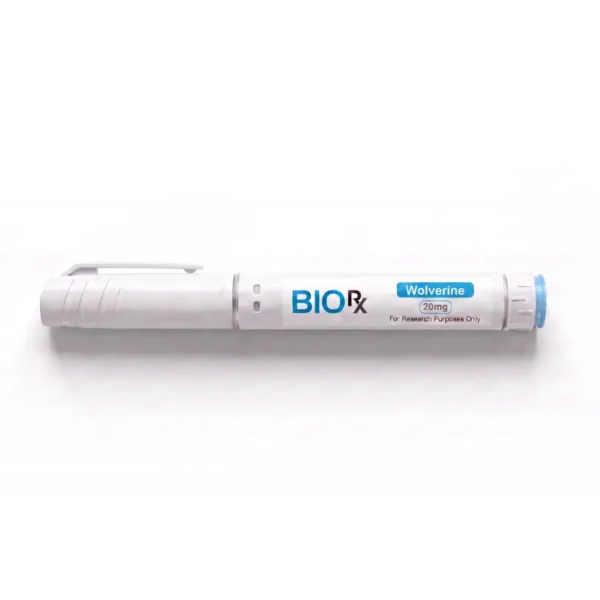
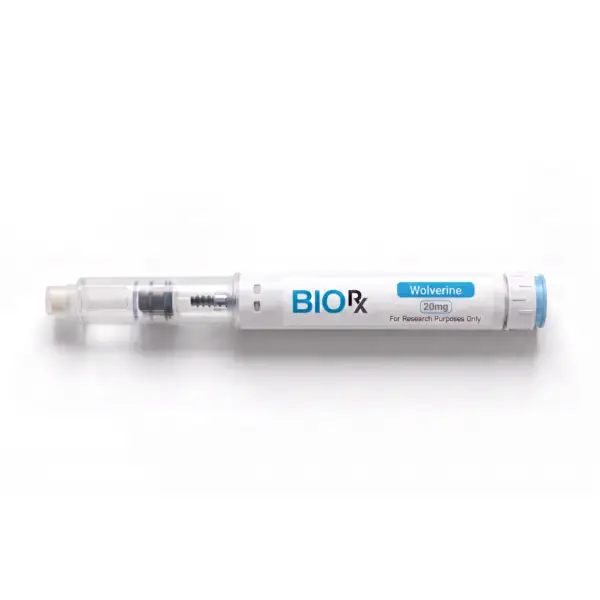
“Stack” is a common term for two or more compounds supplied or studied together. The Wolverine stack combines BPC-157 and TB-500 in equal amounts by mass. BioRX Medical supplies it as a single lyophilized (freeze-dried) vial, so both peptides are reconstituted together in one step.
What is BPC-157?
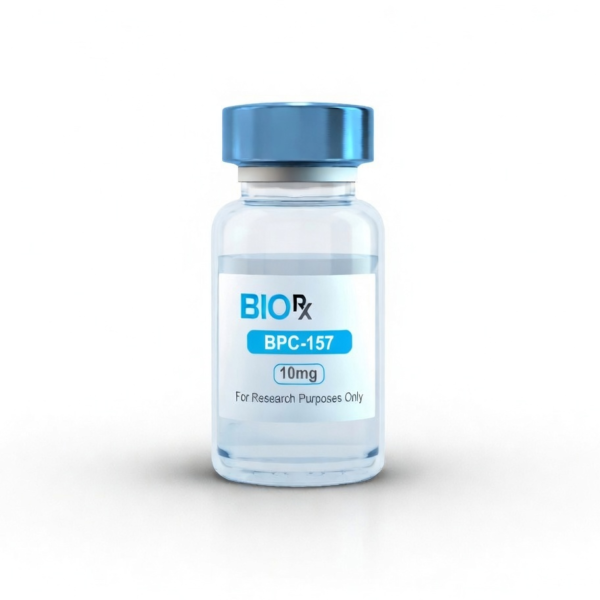
BPC-157 is a synthetic peptide made of 15 amino acids (a pentadecapeptide). Its sequence is a partial sequence of a protein found in human gastric juice, and the name is short for “body protection compound-157”. Most of the published research on BPC-157 uses cell and animal models, and human data is limited.
What is TB-500?
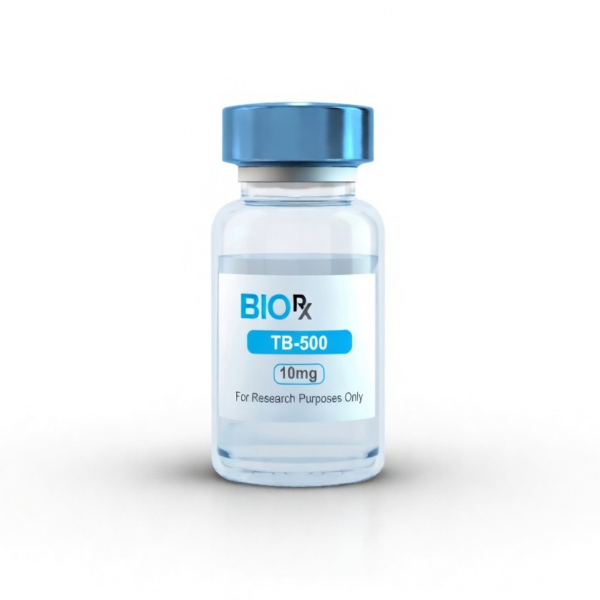
TB-500 is a synthetic peptide related to thymosin beta-4, a 43-amino-acid protein that binds actin. In the research literature and in supplier specifications, TB-500 usually refers to a short fragment of thymosin beta-4, residues 17 to 23 (the sequence Ac-LKKTETQ). The name is not used consistently, and some suppliers apply it more loosely, so always check the identity stated on the certificate of analysis.
Why are they supplied together?
BPC-157 and TB-500 are different molecules with different origins, so a laboratory that studies both can examine them in the same experimental model. Most published work looks at each compound on its own. A fixed-ratio blend is a convenience for researchers who want both compounds in a single vial.
Blend or separate vials?
A blend gives you one vial and a fixed 1:1 ratio. Separate vials let you set your own ratio and handle each peptide independently. If you prefer individual compounds, see our BPC-157 and TB-500 product pages. The blend is available as the Wolverine Stack.
How the blend is labelled
The size on the label is the total mass of peptide in the vial, and each peptide makes up half of it:
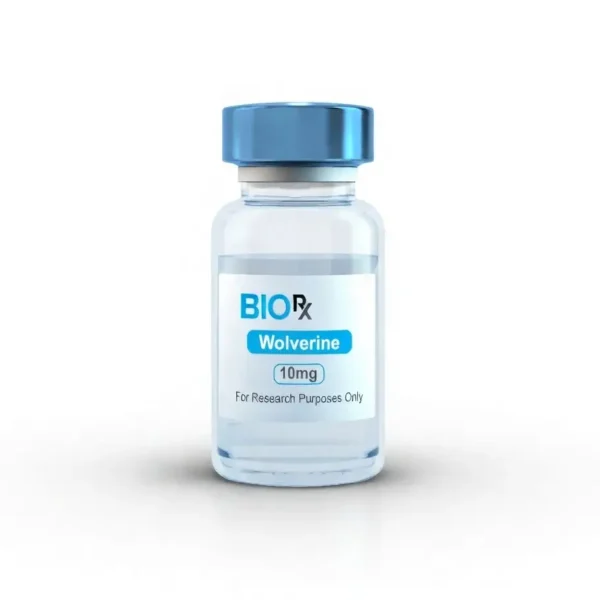
- 10mg vial: 5mg BPC-157 and 5mg TB-500
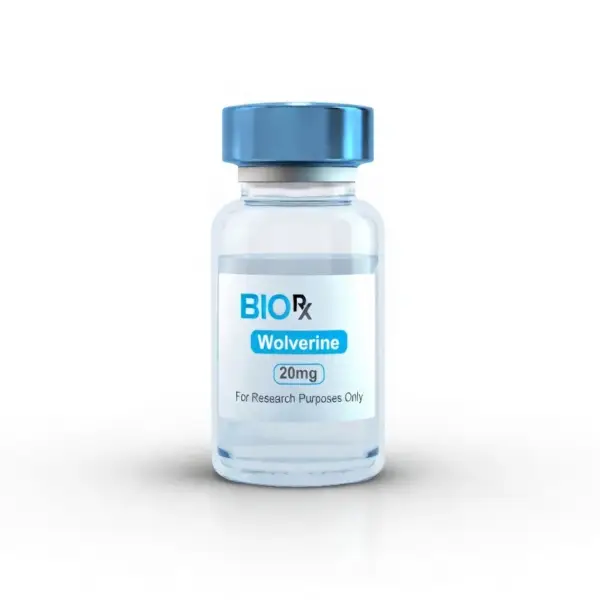
- 20mg vial: 10mg BPC-157 and 10mg TB-500
Reconstitution and concentration
Lyophilized peptides are reconstituted with a laboratory diluent such as bacteriostatic water. The total concentration is the vial mass divided by the diluent volume, and each peptide is half of that. For example, a 10mg vial with 2 mL of diluent is 5 mg/mL in total, or 2.5 mg/mL of each peptide. Our free peptide calculator shows the total concentration for your vial size, and our guide on how to reconstitute peptides covers the full laboratory workflow.
What to check on the documentation
Whatever the supplier, look for a batch-specific certificate of analysis that states the identity of each compound, the purity method and result, and the batch number. For a blend, check that the document covers both peptides. BioRX Medical provides a batch-specific certificate of analysis with every order.
Regulatory status
Health Canada has named BPC-157 and TB-500 among the unauthorized peptide products it has warned about, and it states that a “research use only” label does not make a product legal for consumers. BioRX Medical supplies these compounds for laboratory research only, and nothing on this page is medical advice. Researchers are responsible for following the laws that apply where they work. Read the Health Canada public advisory.
Wolverine stack FAQ
What is in the Wolverine stack?
It is a 1:1 blend by mass of BPC-157 and TB-500 in a single lyophilized vial.
Is the Wolverine stack the same as BPC-157?
No. BPC-157 is one of the two components. The other is TB-500, which is a different peptide with a different origin.
Is TB-500 the same as thymosin beta-4?
Not exactly. TB-500 usually refers to a short fragment of thymosin beta-4 (residues 17 to 23), while thymosin beta-4 is the full 43-amino-acid protein.
Where can I find the Wolverine stack?
BioRX Medical supplies the Wolverine Stack in 10mg and 20mg vials and ships to Canada, the USA, the UK and the EU.
For Research Use Only. Not for human or veterinary use.