What GHK-Cu, BPC-157, and TB-500 Are Being Studied For — and What the Evidence Actually Shows
Disclaimer: The Glow Peptide blend (GHK-Cu, BPC-157, and TB-500) is a combination of research compounds. None of these peptides, individually or combined, are approved by the FDA, EMA, MHRA, Health Canada, or any other regulatory body for human use. They are not drugs, supplements, or cosmetic ingredients approved for topical or injectable use in people. Everything in this article is drawn from published laboratory and animal research and is presented strictly for educational and research-context purposes. Nothing here should be interpreted as a claim that this blend treats, prevents, or improves any human health condition, or as instructions or encouragement for human use.
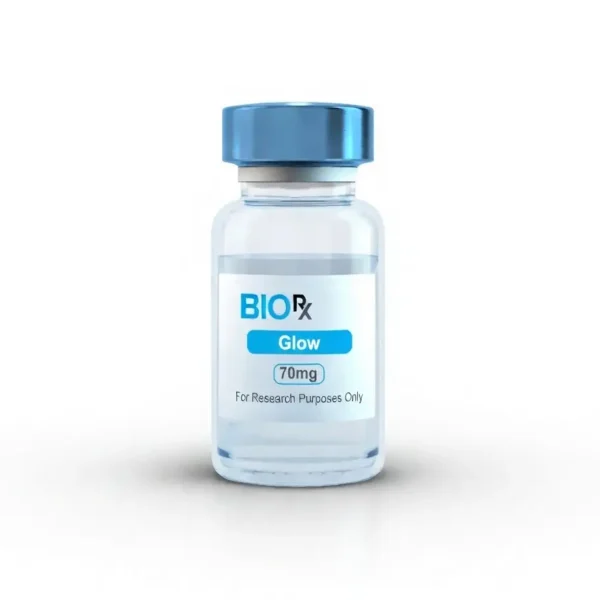
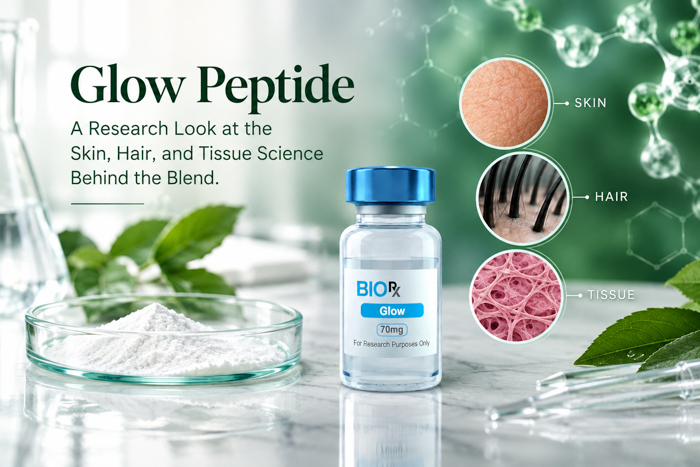
In peptide research circles, few combinations come up as often as the blend commonly referred to as “Glow.” It pairs three separate research peptides — GHK-Cu, BPC-157, and TB-500 (thymosin beta-4) — into a single formulation, based on the idea that each one contributes a different, complementary piece to the broader picture of tissue repair, skin biology, and follicle science.
This article breaks down what’s actually known about each of these three peptides individually, what researchers hypothesize about how they might work together, and — just as importantly — what remains unproven or is still confined to cell-culture and animal studies rather than human clinical trials. All three compounds discussed here are research chemicals: substances studied in laboratories, not medicines, supplements, or skincare ingredients approved for use on or in the human body.
What Is the Glow Peptide Blend?
The Glow blend is not a single molecule — it’s a combination of three well-characterized peptides that are frequently studied together because their individual research profiles touch on overlapping biological territory: collagen and connective tissue, blood vessel formation (angiogenesis), cell migration, and the signaling pathways that govern how skin and hair follicles repair and regenerate themselves.
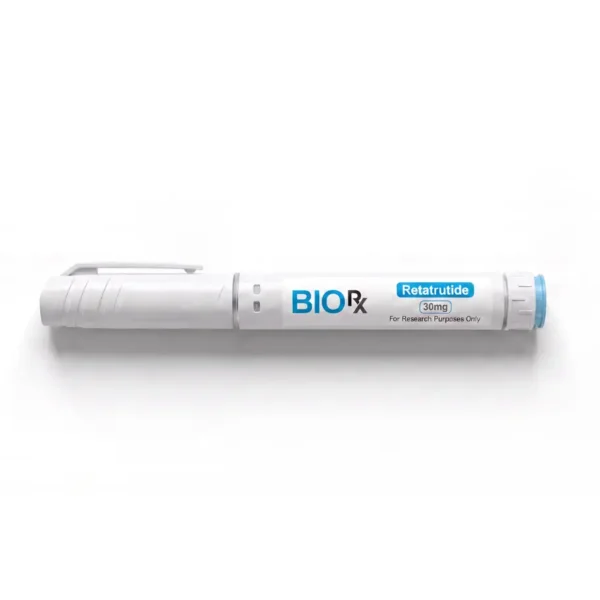
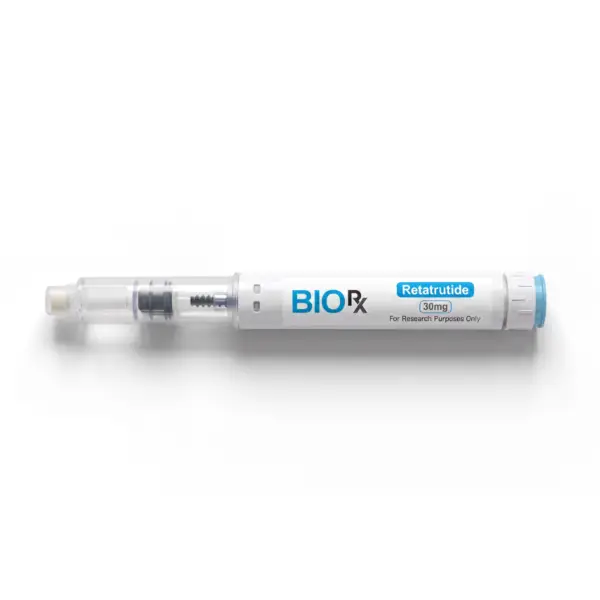
In a research-lab context, blends like this are typically supplied as a lyophilized (freeze-dried) powder that researchers reconstitute for use in cell cultures or animal models. This is also the format used in dual-chamber “pen” delivery devices designed for research settings, which keep the freeze-dried peptide isolated from a bacteriostatic water diluent until the two are combined immediately before use — a format chosen for stability and handling convenience in the lab, not for any implied route of human administration.
The three components are:
GHK-Cu — Copper Tripeptide-1
A naturally occurring copper-binding tripeptide studied for its role in collagen synthesis, wound repair, and skin remodeling.
BPC-157 — Body Protection Compound-157
A synthetic pentadecapeptide derived from a partial sequence found in gastric juice, studied extensively in animal models for its effects on tissue healing, blood vessel growth, and gut protection.
TB-500 — Thymosin Beta-4 (Synthetic Fragment)
A peptide related to a naturally occurring actin-regulating protein, studied for its effects on cell migration, wound healing, and — notably — hair follicle activity in animal models.
GHK-Cu: The Copper Peptide Behind Most “Skin Science” Claims
GHK-Cu (glycyl-L-histidyl-L-lysine, bound to a copper ion) is arguably the most studied peptide in this blend, with a research history stretching back to the 1970s, when biochemist Loren Pickart first identified it as a component of human plasma that appeared to decline with age. That original observation — that a naturally occurring peptide known to support tissue repair becomes less abundant in the body over time — is what launched decades of follow-on research into what GHK-Cu does and how it might be used as a research tool for studying skin and connective tissue biology.
What Researchers Have Found for Skin
A widely cited 2018 review in the International Journal of Molecular Sciences consolidated decades of laboratory findings on GHK-Cu, describing its documented effects on collagen and elastin production, its role as a chemoattractant for immune and repair-related cells, and its influence on gene expression patterns associated with tissue remodeling. The review also discussed genome-wide expression data suggesting GHK-Cu influences a notably broad set of genes tied to tissue repair and antioxidant activity — a finding researchers cite as one explanation for why the peptide shows effects across so many different tissue types in laboratory models, not just skin. [1]
Earlier laboratory work established the more foundational finding that GHK-Cu stimulates collagen synthesis in cultured fibroblasts, the cells responsible for producing the structural proteins that give skin its firmness and elasticity. This fibroblast-stimulating effect is the mechanistic basis most other GHK-Cu skin research builds on.
What Researchers Have Found for Hair
Hair-focused research on copper peptides has centered on their effects on the dermal papilla — a small cluster of specialized fibroblast-like cells at the base of each hair follicle that governs the hair growth cycle. A 2007 study published in Archives of Pharmacal Research examined a closely related copper tripeptide complex (AHK-Cu) using human hair follicles maintained in organ culture and isolated dermal papilla cells. The researchers found that the copper peptide complex stimulated elongation of the follicles ex vivo and increased proliferation of dermal papilla cells in vitro, while also reducing markers associated with cell death in those same cells. [2]
This line of research is often summarized as evidence that copper peptides may support the biological environment in which healthy hair follicles cycle through their growth phases — though it’s worth being precise about what this research actually demonstrates: laboratory and ex vivo effects on isolated follicles and cells, not clinical outcomes measured in living human scalps.
What Researchers Have Found for Nails and Connective Tissue
Compared to skin and hair, there is comparatively little peptide-specific research directly targeting nail biology. What does exist tends to extrapolate from GHK-Cu’s broader, well-documented effects on connective tissue and keratinocyte function, since nails — like hair — are keratin-based structures that depend on the health of the surrounding matrix and cuticle tissue. Researchers studying GHK-Cu’s role in general tissue remodeling have noted its influence on keratinocyte migration and extracellular matrix turnover, processes relevant to nail matrix biology, though dedicated nail-specific peptide trials remain sparse in the published literature. [1]
BPC-157: Tissue Repair and Wound-Healing Research
BPC-157 is a synthetic peptide based on a protective protein fragment identified in gastric juice, and the overwhelming majority of research on it has been conducted in animal models rather than humans. Its research profile centers on tissue protection, wound repair, and — most relevant to a “Glow”-style blend — angiogenesis, the process by which new blood vessels form to support healing tissue.
Wound Healing and Skin Research
One of the foundational studies in this area, published in the late 1990s, examined BPC-157’s effects on skin incisional wounds, colon anastomoses, and angiogenesis models in rats. The researchers found that BPC-157 accelerated the formation of granulation tissue, increased collagen deposition, and improved the pace and quality of healing across each of these different tissue models — establishing the peptide’s general reputation as a broad-acting wound-healing research compound rather than one limited to a single organ system. [7]
More recent laboratory work has extended this line of research specifically to skin. A 2015 study published in Drug Design, Development and Therapy examined BPC-157’s effects on alkali-burn wounds in an animal model, alongside cell-culture experiments using human umbilical vein endothelial cells. The researchers reported that BPC-157 improved reepithelialization, increased collagen content in the healing tissue, and promoted the proliferation and migration of the endothelial cells used in the in vitro portion of the study — cells that form the lining of blood vessels and are central to angiogenesis. [6]
Mechanistic Research: Angiogenesis and Growth Factor Signaling
A comprehensive 2021 review in Frontiers in Pharmacology synthesized the broader body of BPC-157 wound-healing research, describing consistent findings across incisional wounds, burns, and diabetic ulcer models regarding the peptide’s effects on collagen formation, granulation tissue development, and blood vessel growth. The review also discussed BPC-157’s studied interactions with growth factor signaling pathways relevant to tissue repair, framing the peptide as a subject of ongoing mechanistic investigation rather than an established clinical therapy. [5]
A more recent systematic review focused on orthopedic and sports-medicine applications similarly concluded that while preclinical data on BPC-157 is extensive, the peptide’s effects on growth-factor receptor expression and inflammatory signaling remain areas of active study, and controlled human trial data is still limited relative to the animal literature. [10]
Where BPC-157’s Skin-Specific Research Stands
It’s worth being direct here: BPC-157’s research base is deepest in gut, tendon, ligament, and general wound-repair models, with skin-specific data being a smaller — though growing — subset of that broader literature. Its inclusion in a skin-and-hair-oriented blend like Glow is grounded primarily in its angiogenic and general wound-healing profile, which researchers view as complementary to the more skin- and follicle-specific mechanisms of GHK-Cu and TB-500, rather than being independently proven for skin, hair, or nail outcomes on its own.
TB-500 (Thymosin Beta-4): Regeneration and Hair Follicle Research
TB-500 refers to a synthetic version of a naturally occurring protein fragment derived from thymosin beta-4, a small actin-regulating protein found throughout the body. Thymosin beta-4’s core biological role involves binding to actin, a structural protein essential to how cells move, change shape, and migrate — a function that turns out to be relevant to wound healing, blood vessel formation, and, somewhat unexpectedly, hair growth.
The Discovery of Its Hair Growth Effects
The connection between thymosin beta-4 and hair follicles was, by the researchers’ own account, an incidental finding. While studying the protein’s effects on wound healing in rodent models, a research team led by Deborah Philp at the National Institutes of Health observed that hair grew back noticeably faster around the edges of the wounds being treated. That observation led to a dedicated line of research, published in The FASEB Journal in 2004, which found that thymosin beta-4 stimulated hair growth in normal rats and mice and appeared to work by activating hair follicle stem cells and promoting their migration to the base of the follicle — a key step in the active growth phase of the hair cycle. [3]
Follow-Up Mechanistic Research
A companion study from the same research group, published in Mechanisms of Ageing and Development, described thymosin beta-4’s broader effects on angiogenesis, wound repair, and hair follicle development, noting that topical application in aged mice promoted increased collagen deposition and keratinocyte migration during wound healing, alongside the follicle-stimulating effects observed separately. [4]
A later independent study published in PLOS ONE examined thymosin beta-4’s effects on hair growth in mice more directly, describing accelerated hair regrowth in treated animals and further supporting the idea that the peptide’s actin-regulating and cell-migration properties extend meaningfully into follicle biology, not just general wound closure. [9]
What This Means — and What It Doesn’t
This body of research is genuinely interesting from a mechanistic standpoint: a protein already known for promoting blood vessel growth and wound closure appears, in animal models, to also activate the stem cell populations responsible for cycling hair follicles into their active growth phase. That said, this research has been conducted almost entirely in rodent models. Human hair follicle biology, while sharing core mechanisms with rodent models, differs in cycle length, density, and hormonal regulation in ways that make direct extrapolation to human outcomes something researchers are still actively working to establish rather than something the existing animal data confirms outright.
Copper’s Broader Role in Skin Aging Research
Part of why GHK-Cu draws so much research interest beyond simple collagen stimulation is its proposed role as a signal of tissue “youthfulness” more broadly. The 2018 review in the International Journal of Molecular Sciences discussed data suggesting that GHK-Cu shifts gene expression patterns in a direction associated with younger, more regenerative cell states across multiple tissue types — not limited to skin. Researchers have used this as a starting point for asking whether a peptide that appears to influence such a wide network of repair-related genes might have applications extending beyond simple wrinkle-focused skin care into broader questions about how connective tissue ages and repairs itself over time. [1]
This same review also discussed GHK-Cu’s documented behavior as a chemoattractant — a molecule that helps recruit immune and repair cells to a site of injury — and its antioxidant-supporting activity as a cofactor for certain enzyme systems. Together, these findings form the mechanistic backbone researchers point to when explaining why GHK-Cu shows up not just in skin studies, but in laboratory research spanning liver, lung, bone, and stomach lining tissue as well. [1]
How the Dual-Chamber Format Fits Into Peptide Research
Peptides like GHK-Cu, BPC-157, and TB-500 are unstable once reconstituted in liquid form, which is why they are typically supplied and studied as lyophilized (freeze-dried) powder. In a laboratory setting, researchers reconstitute this powder with a diluent — commonly bacteriostatic water — immediately before use in a cell culture or animal study, since the reconstituted peptide has a limited stable shelf life even under refrigeration.
Dual-chamber delivery devices exist specifically to solve this practical storage problem: they keep the lyophilized peptide isolated in one chamber and the diluent in a separate chamber until the two are combined, which extends the effective shelf life of the unreconstituted peptide considerably compared to a pre-mixed liquid solution. This is a packaging and stability solution relevant to laboratory logistics — it has no bearing on, and does not imply anything about, appropriate human use, dosing, or administration route.
Comparing the Glow Blend’s Research Base to Other Tissue-Repair Peptides
It’s useful to place this blend in context against other peptides commonly discussed in tissue-repair and regenerative research. Collagen-stimulating peptides used broadly in cosmetic chemistry (such as palmitoyl pentapeptide-4, sometimes marketed under trade names like Matrixyl) share a similar rationale to GHK-Cu — signaling fibroblasts to increase collagen output — but operate through different receptor and signaling mechanisms and have their own separate research literature.
Growth-factor-based approaches, such as topical or injectable formulations of platelet-derived growth factor or epidermal growth factor, represent a different research strategy again: rather than using a small peptide to indirectly influence signaling pathways, these approaches introduce the growth factor itself. Comparing these different classes of compounds highlights that “peptide research for skin and hair” is a broad and varied field, and the Glow blend represents just one particular combination and hypothesis within it — specifically, one built around a copper-dependent structural peptide, a gut-derived angiogenic peptide, and an actin-regulating cell-migration peptide, rather than growth factors or synthetic collagen-signaling peptides.
Safety Signals Reported in the Preclinical Literature
Because none of these three peptides have completed human clinical trials as a combined product, safety data specific to the blend does not exist. However, the individual research literature does include some safety-relevant observations worth noting for context.
GHK-Cu research has raised questions about copper handling and accumulation with repeated or prolonged exposure, since copper is a trace element the body regulates carefully and excess copper exposure is associated with oxidative stress in some contexts — a consideration researchers weigh when designing dosing protocols for laboratory studies. [1]
BPC-157’s animal research has generally reported a favorable tolerability profile at the doses studied, though independent commentary in the scientific literature has also noted that a large proportion of the published BPC-157 research originates from a small number of research groups, and has called for broader independent replication and more diverse dosing studies before drawing firm conclusions about its safety margins.
TB-500/thymosin beta-4 research has focused primarily on local tissue effects in wound and follicle models, with less published data available on systemic or long-term exposure effects, reflecting the earlier-stage nature of this research relative to more heavily studied compounds.
How the Three Peptides Are Believed to Work Together
The rationale for combining GHK-Cu, BPC-157, and TB-500 into a single research blend rests on the idea that each peptide engages a different — but overlapping — piece of the tissue repair and regeneration puzzle, based on the research reviewed above.
A Complementary, Multi-Pathway Hypothesis
GHK-Cu’s research base centers on collagen and elastin synthesis and fibroblast signaling — the structural side of skin and connective tissue. BPC-157’s research base centers on angiogenesis and general wound-repair acceleration — the vascular and inflammatory side of healing. TB-500’s research base centers on cell migration and stem cell activation — the mechanism by which cells move to where repair is needed and follicles cycle into growth phases. A 2026 review in Dermatological Reviews specifically examined BPC-157 and GHK-Cu together, describing complementary preclinical mechanisms across skin, tendon, muscle, and bone healing models and noting that limited human trial data exists for each individually, with combination research remaining an even earlier-stage area of study. [8]
Researchers studying combination peptide approaches generally frame this kind of blend as a hypothesis about additive or synergistic effects across these three complementary pathways — collagen synthesis, angiogenesis, and cell migration/stem cell activation — rather than as a proven combined effect. Critically, there is currently no published research examining GHK-Cu, BPC-157, and TB-500 specifically as a three-peptide combination; the supporting evidence comes entirely from studies of each peptide in isolation, and researchers extrapolate the rationale for combining them from those separate bodies of work.
What Researchers Are Actually Trying to Prove
It’s worth stepping back and being precise about the state of the science, because a lot of consumer-facing discussion of this blend blurs the line between what’s established and what’s still an open question.
Established (in Preclinical Models)
GHK-Cu reliably stimulates collagen production in cultured fibroblasts and has demonstrated effects on hair follicle and dermal papilla cells in ex vivo human tissue models. BPC-157 reliably accelerates wound closure and promotes angiogenesis across multiple animal wound models. TB-500 reliably promotes hair follicle stem cell activation and accelerates hair regrowth in rodent models, alongside general wound-healing effects. [1,2,5,3]
Still Being Investigated
Whether these effects, demonstrated mostly in cell culture, ex vivo tissue, and animal models, translate into meaningful, measurable outcomes in living human skin, scalp, and nail tissue under controlled clinical trial conditions. Whether combining all three peptides produces additive, synergistic, or simply overlapping effects compared to each one studied alone. What the appropriate research parameters — concentration, exposure duration, delivery method — would even be for a combined-peptide study designed to properly test these questions. Long-term safety and effect profiles, including questions specific to copper accumulation with prolonged GHK-Cu exposure and the immunological and systemic effects of long-term BPC-157 and TB-500 exposure that remain incompletely characterized in the literature.
Why This Distinction Matters
This is precisely the kind of gap that ongoing peptide research aims to close, and it’s why compounds like these remain classified strictly as research chemicals rather than approved therapeutic or cosmetic agents. A cell-culture finding or an animal-model result is a legitimate and often exciting scientific data point — but it is a different category of evidence than a well-designed, placebo-controlled human trial, and responsible discussion of this research should not collapse that distinction.
Hair, Skin, and Nails: A Summary of What’s Being Studied for Each
Because this blend is most often discussed in the context of hair, skin, and nail biology, it’s worth pulling the research together by outcome area rather than just by peptide, so the current state of the evidence is easy to see at a glance.
Skin
Skin is where the research base is strongest and most direct. GHK-Cu’s collagen- and elastin-stimulating effects on fibroblasts are well documented across decades of laboratory work, and BPC-157’s angiogenesis and reepithelialization findings in animal wound models add a complementary vascular and healing-speed dimension. Together, these findings form the most substantiated part of the blend’s overall research rationale, even though the specific combination has not been tested as a unit. [1,6]
Hair
Hair research draws primarily from two separate lines of evidence: GHK-Cu’s (and the closely related AHK-Cu’s) documented effects on dermal papilla cell proliferation and follicle elongation in ex vivo human tissue, and TB-500’s more striking, but rodent-based, findings on hair follicle stem cell activation and accelerated regrowth. These two mechanisms are different — one centers on the follicle’s structural support cells, the other on the stem cell populations that drive the growth cycle — which is part of the reason researchers view them as potentially complementary rather than redundant. [2,3]
Nails
Nails represent the least directly studied of the three areas. No peptide-specific clinical research in this blend targets nail tissue directly; what applies is extrapolated from GHK-Cu’s broader, better-documented effects on keratinocyte function and connective tissue remodeling, since nail matrix biology depends on many of the same underlying cellular processes as skin and hair. Researchers interested in nail-specific outcomes for this blend are, in effect, working from adjacent evidence rather than dedicated nail studies.
Why “Research Use Only” Matters Here
None of the three peptides in this blend have completed the clinical trial process required for regulatory approval as a drug, biologic, or cosmetic ingredient for human use. That has several concrete implications worth understanding.
First, dosing, exposure duration, and delivery parameters used in the published research were designed for specific experimental questions in cell cultures or animal models — they were never established or validated for use in or on the human body, and there is no regulatory body that has reviewed or approved a human-use protocol for this combination.
Second, formulation and manufacturing quality varies enormously across the research-chemical supply chain. Material used in the peer-reviewed studies cited throughout this article was produced and characterized under laboratory research standards, with purity and identity verified through methods like HPLC and mass spectrometry as part of the scientific process. That is a different quality bar than what applies to products sold generally in the research-chemical marketplace, where purity, sterility, and accurate labeling are not independently guaranteed in the same way.
Third, “research use only” is not a marketing phrase — it reflects the genuine, current regulatory status of these compounds. They are intended for use by qualified researchers in laboratory settings studying cell and tissue biology, not for application to or introduction into the human body outside of a regulated clinical trial.
Common Questions About the Glow Peptide Blend
Is Glow Peptide a single peptide or a combination?
It’s a combination — a blend of three separately studied research peptides (GHK-Cu, BPC-157, and TB-500) rather than a single molecule with its own dedicated research literature.
Has this specific three-peptide combination been studied together?
No dedicated published research currently examines GHK-Cu, BPC-157, and TB-500 as a combined formulation. The rationale for pairing them is drawn entirely from research on each peptide studied independently.
Which of the three has the most human research behind it?
GHK-Cu has the longest research history and includes some human tissue (ex vivo) and cell-culture studies, along with a substantial preclinical literature. BPC-157 and TB-500 research is overwhelmingly conducted in animal models, with far less human-tissue or clinical data published to date. [1,5,3]
Does this mean the research is not credible?
Not at all — preclinical and animal research is a legitimate and necessary stage of the scientific process, and the mechanistic findings described in this article come from peer-reviewed journals. The key point is simply that preclinical evidence and clinically validated human outcomes are different categories of evidence, and this blend currently sits in the earlier category.
What does “research use only” mean in practice?
It means a compound is intended for use by trained personnel in laboratory settings — for example, in cell culture experiments or animal studies — and is explicitly not manufactured, tested, or labeled for consumption, injection, or application to the human body. It is a statement of current regulatory and legal status, not a marketing disclaimer that can be interpreted around.
Why do some peptides in this blend have more published research than others?
Research investment tends to follow a combination of factors: how long a compound has been known to science, how commercially or academically interesting its mechanism appears, and how much preclinical promise early studies show. GHK-Cu benefits from a nearly fifty-year research history; BPC-157 has drawn substantial interest over roughly three decades, concentrated heavily in animal models; and TB-500’s hair-and-wound research is comparatively newer and narrower in scope, having emerged largely from a single research program’s initial serendipitous observation. [1,5,3]
Where the Research Goes From Here
The most meaningful next step for this line of research, from a scientific standpoint, would be dedicated combination studies — testing GHK-Cu, BPC-157, and TB-500 together in controlled cell-culture or animal models to determine whether their documented individual mechanisms actually produce additive or synergistic effects when combined, or whether they simply overlap without meaningfully compounding. Equally important would be well-designed human trials for each peptide individually, particularly for BPC-157 and TB-500, where the existing evidence base still leans heavily on rodent models rather than human tissue or clinical outcomes.
Until that research exists, any claims about how this three-peptide blend performs in human skin, hair, or nail tissue — whether made by product marketers or casual online discussion — should be understood as extrapolation from separate, individual-peptide research rather than as findings that have actually been tested and confirmed for the combination itself.
Conclusion
The Glow Peptide blend brings together three peptides with genuinely interesting, independently documented research profiles: GHK-Cu’s well-established role in collagen synthesis and fibroblast signaling, BPC-157’s extensive animal-model wound-healing and angiogenesis research, and TB-500’s notable — if still largely rodent-based — hair follicle stem cell activation findings. Each has its own body of published, peer-reviewed literature exploring how it might contribute to skin, hair, or tissue biology at a mechanistic level.
What the science does not yet show is how these three peptides behave when combined, or how their individually documented cell-culture and animal-model effects translate into outcomes in living human tissue under controlled conditions. That gap is exactly what ongoing peptide research is working to address, and it’s the reason this blend — like its individual components — remains classified strictly as a research compound rather than an approved therapeutic, supplement, or cosmetic product.
References
1. Pickart L, Margolina A. “Regenerative and Protective Actions of the GHK-Cu Peptide in the Light of the New Gene Data.” International Journal of Molecular Sciences. 2018;19(7):1987. https://pmc.ncbi.nlm.nih.gov/articles/PMC6073405/
2. Pyo HK, Yoo HG, Won CH, Lee SH, Kang YJ, Kim KH. “The effect of tripeptide-copper complex on human hair growth in vitro.” Archives of Pharmacal Research. 2007;30(7):834-839. https://doi.org/10.1007/BF02978833
3. Philp D, Nguyen M, Scheremeta B, et al. “Thymosin beta4 increases hair growth by activation of hair follicle stem cells.” The FASEB Journal. 2004;18(2):385-387. https://pubmed.ncbi.nlm.nih.gov/14657002/
4. Philp D, Goldstein AL, Kleinman HK. “Thymosin β4 promotes angiogenesis, wound healing, and hair follicle development.” Mechanisms of Ageing and Development. 2004;125(2):113-115. https://www.sciencedirect.com/science/article/abs/pii/S0047637403002252
5. Sikiric P, Seiwerth S, Rucman R, et al. “Stable Gastric Pentadecapeptide BPC 157 and Wound Healing.” Frontiers in Pharmacology. 2021;12:627533. https://www.ncbi.nlm.nih.gov/pmc/articles/PMC8275860/
6. Huang T, Zhang K, Sun L, et al. “Body protective compound-157 enhances alkali-burn wound healing in vivo and promotes proliferation, migration, and angiogenesis in vitro.” Drug Design, Development and Therapy. 2015;9:2485-2499. https://pubmed.ncbi.nlm.nih.gov/25995620/
7. Seiwerth S, Sikiric P, Grabarevic Z, et al. “BPC 157’s effect on healing.” Journal of Physiology-Paris. 1997;91(3-5):173-178. https://pubmed.ncbi.nlm.nih.gov/9403790/
8. Sarbaziha R, et al. “Copper Peptides in Regenerative Aesthetic Dermatology.” Dermatological Reviews. 2026. https://onlinelibrary.wiley.com/doi/abs/10.1002/der2.70067
9. Cha HJ, Philp D, Lee SH, et al. “Thymosin Beta-4 Induces Mouse Hair Growth.” PLOS ONE. 2015. https://journals.plos.org/plosone/article?id=10.1371%2Fjournal.pone.0130040
10. “Emerging Use of BPC-157 in Orthopaedic Sports Medicine: A Systematic Review.” https://pmc.ncbi.nlm.nih.gov/articles/PMC12313605/
This article is for informational and research-education purposes only. GHK-Cu, BPC-157, and TB-500, individually or as the Glow Peptide blend, are not approved by the FDA or any other regulatory authority for human use, are not medicines or cosmetic ingredients, and are not intended for use in or on the human body outside of a regulated research setting.