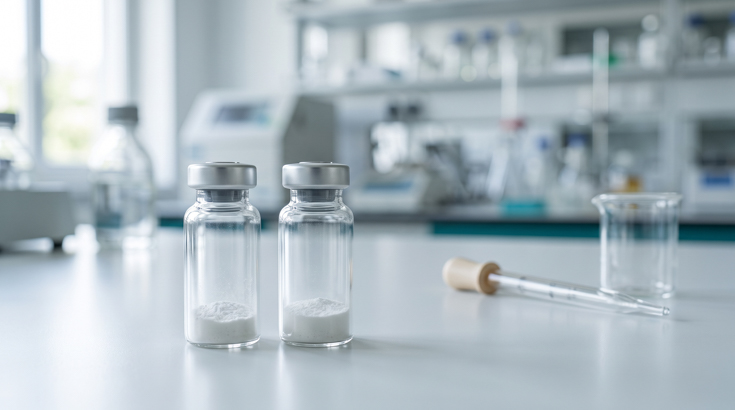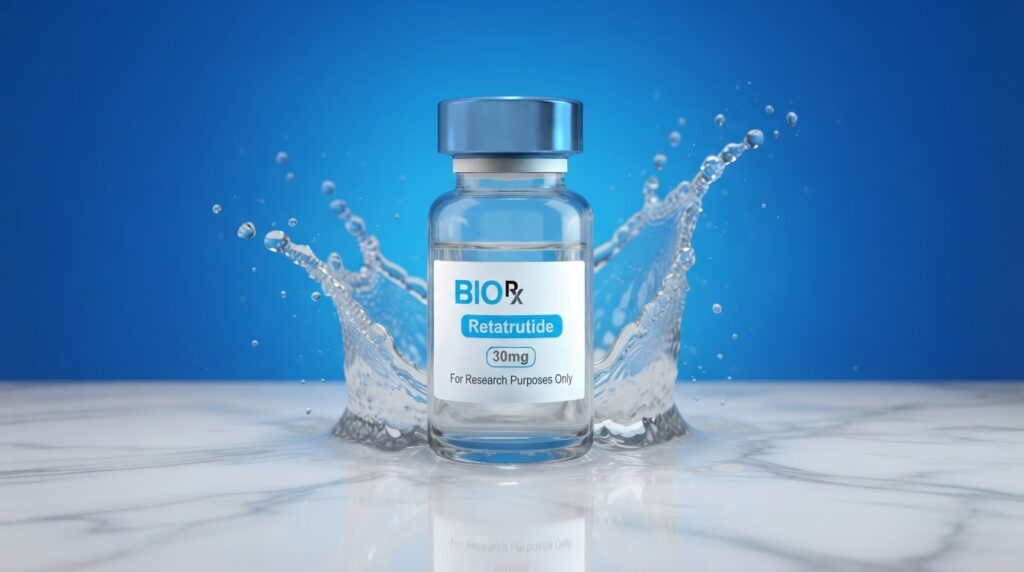
Most research peptides arrive as a freeze-dried (lyophilized) powder, which keeps the compound stable until you are ready to work with it. Before any assay or experiment, that powder has to be dissolved in a diluent to make a solution of known concentration. This guide explains the concentration math, how to think about diluent choice, and the handling and record-keeping habits that keep laboratory work consistent.
What Reconstitution Means
Reconstitution simply means adding a measured volume of liquid to a lyophilized powder so that it dissolves into a solution. The result is only useful if you know exactly how much compound is in each mL, which is why the volume you add matters as much as the powder itself.
Choosing a Diluent
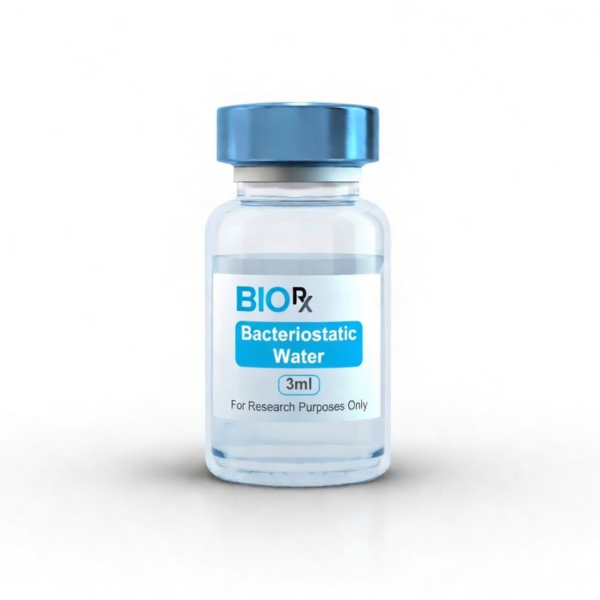
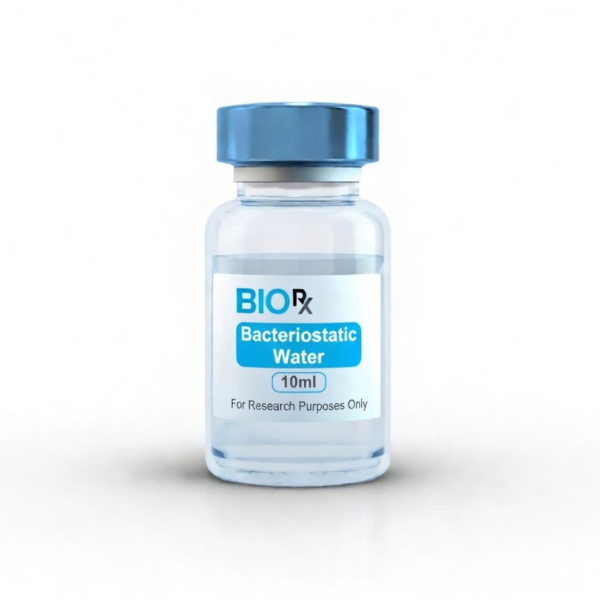
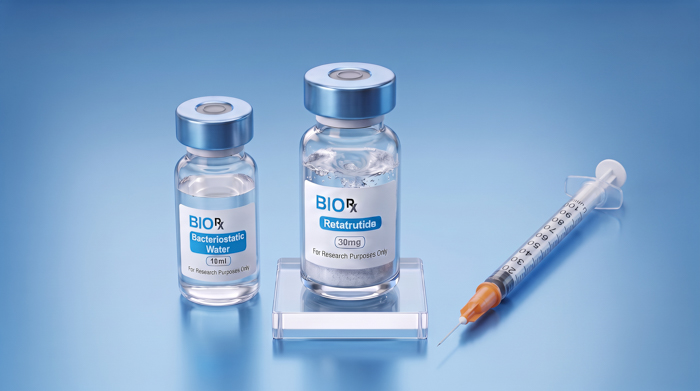
The right diluent depends on your protocol. Sterile water is one option. Bacteriostatic water, which contains an agent that inhibits bacterial growth, is often chosen when a solution will be sampled more than once over time. Some protocols call for a specific buffer instead, so always follow your own procedure first. BioRX Medical supplies bacteriostatic water in 3 mL and 10 mL sizes for laboratory research use.
The Concentration Formula
Concentration is the mass of peptide divided by the volume of diluent:
Concentration (mg/mL) = peptide mass (mg) ÷ diluent volume (mL)
For example, a 5 mg vial reconstituted with 2 mL of diluent gives 5 ÷ 2 = 2.5 mg/mL. To work backwards from a target concentration, rearrange the formula:
Diluent volume (mL) = peptide mass (mg) ÷ target concentration (mg/mL)
A 10 mg vial brought to a target of 5 mg/mL needs 10 ÷ 5 = 2 mL of diluent. If your protocol is written in micrograms, remember that 1 mg equals 1,000 µg, so 2.5 mg/mL is the same as 2,500 µg/mL.
To skip the arithmetic, use our free peptide calculator: choose a vial size and it shows the concentration for different volumes of bacteriostatic water.
Laboratory Handling Steps
- Check the vial label and batch number against the Certificate of Analysis that arrived with your order.
- Let the vial reach room temperature before opening, which limits condensation on the powder.
- Work in a clean area and use clean or sterile tools according to your laboratory’s procedures.
- Add the diluent slowly down the inside wall of the vial rather than directly onto the powder.
- Swirl the vial gently until the powder dissolves. Avoid vigorous shaking, which can cause foaming.
- Inspect the solution. It should typically be clear. If it is cloudy or contains particles, do not use it and contact your supplier.
- Label the vial with the compound, concentration, diluent and date.
Storage and Stability
Lyophilized peptides are generally stored cold, dry and protected from light. Once reconstituted, a solution is usually kept refrigerated, and how long it stays usable varies by compound, so follow the storage guidance for your specific product and protocol. Avoid repeated freeze-thaw cycles where possible. If your protocol requires it, divide the solution into smaller aliquots rather than repeatedly warming and cooling a single container.
Keep Good Records
Document the lot number, peptide mass, diluent type and volume, resulting concentration and date for every preparation. A Certificate of Analysis is included with every BioRX Medical peptide order, so you can keep batch documentation alongside your own laboratory notes.
Frequently Asked Questions
How much diluent should I add to a peptide vial?
It depends on the concentration your protocol needs. Use the formula above: divide the peptide mass in mg by your target concentration in mg/mL.
Do I have to use bacteriostatic water?
No. The diluent is set by your protocol. Bacteriostatic water is one common choice, and others are used depending on the requirements of the experiment.
Can I prepare a solution ahead of time?
Stability varies by compound and storage conditions, so follow the guidance for your specific product and protocol rather than assuming a general rule.
Explore our Metabolic research range or browse more guides in Peptide Insights.
For Research Use Only. Not for human or veterinary use. This article is general laboratory background and is not medical advice or guidance for personal use.