The Science Behind the Triple-Agonist Peptide Making Headlines
Disclaimer: Retatrutide is an investigational compound. It is not approved by the FDA, EMA, MHRA, Health Canada, or any other regulatory body for human use, and it cannot be legally prescribed or sold as a medicine anywhere in the world. Everything discussed in this article reflects findings from controlled clinical research programs and is presented strictly for educational and informational purposes. Retatrutide peptide explained in depth: Nothing here should be interpreted as medical advice, a recommendation to acquire or use retatrutide outside of a registered clinical trial, or a substitute for guidance from a licensed healthcare provider.
Introduction
If you’ve spent any time in corners of the internet devoted to metabolic health, weight management, or longevity science over the past couple of years, you’ve probably run into the name “retatrutide.” It’s frequently described as the most potent weight-loss compound ever tested in large clinical trials, and it has become something of a lightning rod for excitement, speculation, and — inevitably — misuse of research chemicals outside their intended context.
This article takes a step back from the hype cycle and looks at what retatrutide actually is, how it works at a biological level, what the clinical trial data has shown so far, and why the scientific and medical communities are paying such close attention to it. Along the way, we’ll also be honest about the parts of the story that get glossed over: the side effects, the unanswered questions, and the fact that this is still, as of today, an experimental drug undergoing formal regulatory review rather than something available on pharmacy shelves.
Retatrutide Peptide Explained In Depth
Retatrutide is a synthetic peptide developed by Eli Lilly and Company, the same pharmaceutical manufacturer behind the diabetes and obesity drugs tirzepatide (marketed as Mounjaro and Zepbound) and the oral GLP-1 medication orforglipron. Chemically, retatrutide belongs to a class of molecules known as incretin-based therapies, but it distinguishes itself from earlier drugs in this category by targeting not one, not two, but three separate hormone receptors simultaneously.
This “triple agonist” design is the single most important thing to understand about retatrutide, because it’s the reason researchers believe it may outperform earlier-generation drugs like semaglutide (Ozempic, Wegovy) and even tirzepatide, which itself was considered a breakthrough for combining two receptor targets instead of one.
To understand why hitting three receptors at once matters, it helps to walk through what each of those receptors does in the body.
The Three Targets: GLP-1, GIP, and Glucagon
GLP-1 (Glucagon-Like Peptide-1) Receptor
GLP-1 is a hormone released by cells in the small intestine after eating. It plays several roles that are central to blood sugar regulation and appetite control: it stimulates the pancreas to release insulin in response to rising blood glucose, it suppresses the release of glucagon (a hormone that raises blood sugar), it slows the rate at which the stomach empties its contents into the intestine, and it acts on receptors in the brain — particularly in the hypothalamus and brainstem — to promote feelings of fullness and reduce appetite.
GLP-1 receptor agonism is the mechanism behind the first wave of modern weight-loss and diabetes drugs, including semaglutide and liraglutide. These medications mimic the natural hormone and amplify its effects, which is how they produce meaningful weight loss and improved blood sugar control.
GIP (Glucose-Dependent Insulinotropic Polypeptide) Receptor
GIP is another gut-derived hormone, sometimes called the “other incretin.” For years, its role in metabolic health was considered secondary to GLP-1, and some early research even suggested that blocking GIP might be beneficial. More recent science has reversed that assumption. GIP receptor activation appears to improve insulin sensitivity, support healthy fat cell function, and may work synergistically with GLP-1 to enhance appetite suppression and improve how the body processes and stores fat. Tirzepatide’s combination of GLP-1 and GIP agonism was the first drug to fully capitalize on this synergy, and its clinical results (surpassing semaglutide in head-to-head weight loss trials) helped validate the theory that dual-hormone targeting could outperform single-hormone approaches.
Glucagon Receptor
This is the piece that makes retatrutide unique. Glucagon is often thought of purely as the hormone that raises blood sugar — the counterpart to insulin. But glucagon receptor activation also increases energy expenditure by boosting metabolic rate, promotes the breakdown of stored fat (lipolysis), and may have effects on the liver that improve fat metabolism. The challenge with glucagon has always been that, in isolation, it raises blood sugar, which seems counterproductive in a drug meant to treat diabetes and obesity.
Retatrutide’s design threads this needle by pairing glucagon receptor activity with strong GLP-1 and GIP agonism. The blood-sugar-lowering effects of the other two pathways are believed to offset the blood-sugar-raising tendency of glucagon activation, while the metabolic rate and fat-burning benefits of glucagon signaling are preserved. In simple terms: it’s an attempt to get the calorie-burning benefits of glucagon without the downside.
How Retatrutide Was Discovered and Developed
Retatrutide didn’t appear out of nowhere. It’s the product of an extended lineage of incretin research that stretches back decades, beginning with the discovery of the incretin effect in the 1960s and accelerating dramatically after GLP-1 receptor agonists proved viable as diabetes treatments in the early 2000s.
Eli Lilly’s internal research pipeline built on the lessons learned from tirzepatide, which itself was a landmark achievement as the first dual GIP/GLP-1 agonist to reach the market. Scientists working on the next generation of incretin therapies theorized that adding a third mechanism — one that worked through an entirely different pathway rather than simply increasing the dose of an existing one — could produce additive or even synergistic benefits rather than just a stronger version of the same drug.
Early animal studies and Phase 1 human trials focused on establishing safety and finding an appropriate dosing structure, since triple-receptor activation was uncharted territory. From there, the compound progressed into Phase 2 trials, and the results were striking enough that they generated substantial attention in both the scientific literature and financial press. A widely cited Phase 2 trial, published in the New England Journal of Medicine in 2023, found that participants receiving the highest tested dose of retatrutide lost an average of roughly 24% of their body weight over 48 weeks — a figure that, at the time, was unprecedented for any pharmacological weight-loss intervention in a randomized controlled trial.
Those Phase 2 results are what set the stage for the large-scale Phase 3 program that has been reporting results throughout 2026.
Where the Research Stands Today
As of mid-2026, retatrutide is deep into Phase 3 clinical testing under Eli Lilly’s TRIUMPH and TRANSCEND trial programs, which together span multiple patient populations and health conditions. This is a critical point: Phase 3 trials are the final and most rigorous stage of testing before a drug can be submitted for regulatory approval, but completing Phase 3 does not mean a drug is approved. It means the evidence base is maturing and regulators will soon have enough data to make a formal decision.
Several major trial readouts have already been announced:
TRIUMPH-1
A Phase 3 trial in adults with obesity or overweight, enrolling more than 2,300 participants who were randomized to receive 4mg, 9mg, or 12mg doses of retatrutide, or a placebo, over 80 weeks. Topline results reported in mid-2026 showed clinically meaningful weight loss across every active dose. Participants receiving the lowest studied dose lost an average of roughly 17-18% of their body weight, while those on the highest dose lost approximately 25-28% on average, with some participants with more severe obesity losing up to 30% of their starting body weight when dose escalation protocols were extended. Notably, researchers observed no clear weight-loss plateau through the study period, meaning participants were still losing weight when the trial’s primary assessment window closed — a pattern that suggests the ceiling of the drug’s effect may not yet have been fully mapped.
TRIUMPH-4
Examined retatrutide specifically in people with obesity and knee osteoarthritis, a combination that’s clinically relevant because excess body weight is one of the most significant modifiable risk factors for joint degeneration and pain. Over 68 weeks, participants on the highest dose lost close to 29% of their body weight on average, and researchers also tracked functional and pain-related outcomes tied to the osteoarthritis diagnosis.
TRANSCEND-T2D-1
Shifted the focus to people with type 2 diabetes, a population that tends to lose somewhat less weight on incretin therapies than metabolically healthier individuals, in part because of differences in underlying insulin resistance and the frequent use of other glucose-lowering medications. Even so, this trial reported meaningful reductions in both hemoglobin A1c (a long-term marker of blood sugar control) and body weight, with participants on the highest dose losing an average of nearly 17% of their body weight over 40 weeks alongside substantial improvements in glycemic control. Researchers noted that retatrutide met not just its primary endpoint but all of its key secondary endpoints in this trial, which is a strong signal of consistent, reproducible efficacy rather than a single favorable result.
Beyond these headline trials, nested sub-studies have also looked at outcomes like obstructive sleep apnea severity, with early data suggesting substantial reductions in apnea-hypopnea index (a measure of how often breathing is disrupted during sleep) among participants with obesity-related sleep apnea.
Additional Phase 3 trials — including studies in patients with established cardiovascular disease and broader diabetes populations — are ongoing, with further results expected before the end of 2026. Eli Lilly has indicated that a New Drug Application to the FDA is anticipated in the second half of 2026, with formal approval, if granted, realistically expected sometime in late 2027, and a potential commercial launch in 2028. Those timelines are projections based on standard regulatory review windows and could shift depending on how the remaining trial data reads out and how regulators respond to the completed application.
The Proposed Benefits: What the Data Suggests So Far
It’s worth walking through the specific areas where retatrutide has shown promise in research settings, while being careful to frame these as findings from clinical trials in defined patient populations rather than guarantees of what any individual might experience.
1. Substantial Weight Reduction
This is, by a wide margin, the effect that has driven the most attention. Across multiple independent trials, retatrutide has consistently produced average weight loss in the range of 17% to nearly 30% of starting body weight, depending on the dose and study population. For context, this places it ahead of the average results reported for semaglutide (roughly 15% in comparable trials) and appears to be at least comparable to, and in some analyses greater than, the results seen with tirzepatide. Some researchers and clinicians have described retatrutide’s Phase 2 and Phase 3 results as approaching the magnitude of weight loss typically associated with bariatric surgery, which is a notable benchmark given that surgical intervention has historically been the most effective weight-loss tool available.
2. Improved Blood Sugar Control in Type 2 Diabetes
Because GLP-1 and GIP receptor activation both stimulate insulin secretion in a glucose-dependent manner (meaning they primarily act when blood sugar is elevated, which reduces the risk of dangerously low blood sugar compared to some older diabetes medications), retatrutide has shown meaningful reductions in HbA1c among people with type 2 diabetes. The TRANSCEND-T2D-1 trial reported HbA1c reductions of up to 2.0 percentage points on the highest dose, which is a clinically significant improvement — many people with poorly controlled type 2 diabetes are working to reduce their HbA1c by just 1 to 1.5 points through medication and lifestyle changes combined.
3. Favorable Shifts in Cardiometabolic Markers
Weight loss of this magnitude tends to bring a cascade of secondary improvements, and trial data has reflected this. Researchers have reported favorable changes in lipid profiles, including reductions in LDL cholesterol and triglycerides, along with improvements in blood pressure among trial participants. These are the kinds of downstream markers that matter most for long-term cardiovascular risk, and they’re a major reason cardiovascular outcomes trials are currently underway — regulators and clinicians want to know not just whether the drug helps people lose weight, but whether that weight loss translates into fewer heart attacks, strokes, and cardiovascular deaths over time.
4. Reduction in Obstructive Sleep Apnea Severity
Obesity is one of the strongest risk factors for obstructive sleep apnea, a condition in which the airway repeatedly collapses during sleep, causing pauses in breathing and fragmented, poor-quality rest. Early sub-study data from the TRIUMPH program has shown substantial reductions in apnea-hypopnea index among participants with obesity-related sleep apnea — in some reported figures, more than a 60% reduction from a starting point that would be classified as severe. This mirrors a pattern already seen with tirzepatide, which received a specific regulatory approval for sleep apnea in patients with obesity, and it raises the possibility that retatrutide could eventually be studied and potentially indicated for the same purpose.
5. Improvements in Osteoarthritis-Related Pain and Function
The TRIUMPH-4 trial specifically enrolled participants with both obesity and knee osteoarthritis, based on the well-established relationship between excess body weight and joint stress. Beyond the weight loss itself, researchers tracked pain and functional outcomes tied to the osteoarthritis diagnosis, reflecting growing interest in whether substantial weight reduction can meaningfully change the trajectory of a condition that’s traditionally managed with pain medication, physical therapy, and eventually joint replacement surgery in severe cases.
6. No Observed Weight-Loss Plateau
One detail that has drawn particular interest from researchers is that, unlike some earlier weight-loss drugs where participants’ weight loss tends to level off after a certain point, retatrutide trial participants continued losing weight through the full duration of the study periods reported so far. This doesn’t necessarily mean weight loss would continue indefinitely, but it does suggest that the trials conducted to date may not have captured the full ceiling of the drug’s effect, and it raises interesting questions for future research about optimal treatment duration.
7. Interest From the Longevity and Metabolic Health Research Community
Beyond the specific clinical endpoints being formally studied, retatrutide has attracted attention from researchers interested in the broader relationship between metabolic health, fat mass, insulin sensitivity, and markers associated with aging. Because excess visceral fat is linked to chronic low-grade inflammation and a variety of age-related health risks, some researchers have speculated about whether triple-agonist therapy could have downstream benefits relevant to metabolic aging. It’s important to be clear that this remains a hypothesis rather than an established finding — there is currently no clinical trial data specifically designed to test longevity-related endpoints for retatrutide, and claims along these lines should be treated as speculative until dedicated research exists.
Side Effects and Safety Considerations Observed in Trials
No discussion of retatrutide would be complete, or responsible, without covering what the trial data has shown about tolerability and risk. This is where the story becomes more nuanced than the headline weight-loss figures suggest.
Gastrointestinal Effects
The most commonly reported side effects across the incretin drug class as a whole, and retatrutide is no exception. Nausea, vomiting, diarrhea, constipation, and decreased appetite have all been reported at meaningful rates in trial participants, particularly during the initial dose-escalation period. These effects tend to be most pronounced when doses are increased and often diminish somewhat as the body adjusts, but they are a significant reason some participants discontinue treatment.
Discontinuation Rates
Worth paying attention to as a real-world signal of tolerability. Some published analyses of the general obesity trial population have reported discontinuation rates in the range of 10-12% due to adverse events, which gives a sense of how many people found the side effect burden difficult to sustain even in a closely monitored clinical trial setting with medical support.
Dysesthesia
An unusual sensory symptom involving abnormal or unpleasant skin sensations (sometimes described as tingling, burning, or altered touch sensitivity), has been reported in a notable minority of trial participants — some analyses have cited rates approaching 20% in certain dose groups. This is a less commonly discussed side effect compared to gastrointestinal symptoms, and it’s an area regulators are likely to scrutinize closely as they evaluate the overall risk-benefit profile.
Heart Rate Changes
Have also been observed, which is consistent with what’s known about glucagon receptor activation, since glucagon signaling can have mild stimulatory cardiovascular effects. Researchers are tracking this carefully, particularly in trials involving participants with pre-existing cardiovascular disease.
Gallbladder-Related Events
Including gallstones, have been reported in incretin-based weight-loss trials generally, likely related to the rate and magnitude of weight loss itself rather than a direct drug effect, since rapid weight loss from any cause is a known risk factor for gallstone formation.
Long-Term Safety Data Remains Limited
This is arguably the most important caveat of all. Even the longest trials completed so far span less than two years, and a drug intended for long-term, potentially indefinite use in a large population needs a much longer track record before its full safety profile is understood. Questions about effects on bone density, muscle mass preservation during rapid weight loss, pancreatic health, thyroid tissue (an area of ongoing monitoring for the entire GLP-1 drug class following signals seen in some animal studies), and rare but serious adverse events will continue to be studied well beyond the initial approval process, assuming approval is eventually granted.
Why “Research Use Only” Actually Matters
It’s easy to see headlines about 30% weight loss and assume a drug like this should be available immediately. But there are concrete reasons the regulatory process exists, and they apply directly to retatrutide.
First, dosing in clinical trials is carefully calibrated and monitored by physicians who track lab values, vital signs, and side effects at regular intervals, with the ability to adjust or discontinue treatment based on individualized medical judgment. This oversight is a core part of why trial participants can tolerate a compound that has meaningful side effects — problems are caught early and managed by professionals.
Second, formulation and manufacturing matter enormously for peptide drugs. Clinical trial material is produced under strict pharmaceutical manufacturing standards with rigorous purity testing, sterility assurance, and quality control. Peptides sold outside of regulated pharmaceutical supply chains — including many products marketed under research chemical labeling — do not carry the same guarantees, and issues with purity, contamination, incorrect concentration, or degraded product are real and documented risks in the broader research chemical marketplace.
Third, regulatory approval isn’t just a bureaucratic formality — it’s the process by which independent experts outside the manufacturer evaluate the totality of safety and efficacy data, including data the public doesn’t typically see, before deciding whether a drug’s benefits justify its risks for specific patient populations. That evaluation is still ongoing for retatrutide.
For all of these reasons, retatrutide remains, as of today, a compound that exists appropriately within the boundaries of registered clinical trials and legitimate laboratory research settings — not as a product for personal use outside of that context.
How Retatrutide Compares to Existing Drugs
Since retatrutide is frequently discussed alongside semaglutide and tirzepatide, a brief comparison helps put the numbers in context.
Semaglutide, a single-target GLP-1 receptor agonist, produced average weight loss of around 15% of body weight in its major Phase 3 obesity trials. It has an extensive real-world track record at this point, having been on the market since 2017 for diabetes and since 2021 for weight management, which means its long-term safety profile is comparatively well understood.
Tirzepatide, the dual GIP/GLP-1 agonist, improved on those results, with major trials reporting average weight loss in the range of 15-21% depending on dose, and it has also demonstrated benefits for sleep apnea and other obesity-related conditions. It has been available by prescription since 2022 for diabetes and since 2023 for weight management under its respective brand names.
Retatrutide’s triple-agonist mechanism has, in head-to-head comparisons of trial data (not direct comparative trials, which is an important distinction, since cross-trial comparisons carry inherent statistical limitations), shown numerically higher average weight loss than either predecessor. Whether that translates into a superior real-world option will depend on how its safety and tolerability profile holds up under continued study and, eventually, broader use.
How Retatrutide Is Actually Studied in Research Settings
Understanding how a compound like retatrutide moves through the research pipeline helps explain why the process takes years rather than months, and why so much caution surrounds its current classification.
Preclinical research typically begins with in vitro studies — testing how a molecule interacts with its target receptors in isolated cell cultures — followed by animal studies that examine basic pharmacokinetics (how the body absorbs, distributes, metabolizes, and eliminates the compound) and early safety signals. Only after a compound clears these stages does it move into human trials.
Phase 1 trials, usually conducted in small groups of healthy volunteers or closely matched patient populations, are primarily designed to establish safety and determine how the compound behaves in the human body at various doses. Phase 2 trials expand the participant pool and begin to test efficacy in the target patient population, while continuing to monitor safety more broadly. Phase 3 trials, the stage retatrutide is currently in, involve much larger and more diverse participant groups, often numbering in the thousands, and are designed to confirm efficacy, monitor for less common side effects that wouldn’t show up in smaller trials, and generate the statistical evidence regulators need to make an approval decision.
Throughout this entire process, trials are typically randomized (participants are assigned to treatment or placebo groups by chance) and double-blind (neither participants nor the researchers directly interacting with them know who is receiving the active drug versus placebo), which are the two design features that give clinical trial data its scientific credibility. This is a meaningfully different context from informal or self-directed use of a research compound, where none of these controls, monitoring systems, or safety nets exist.
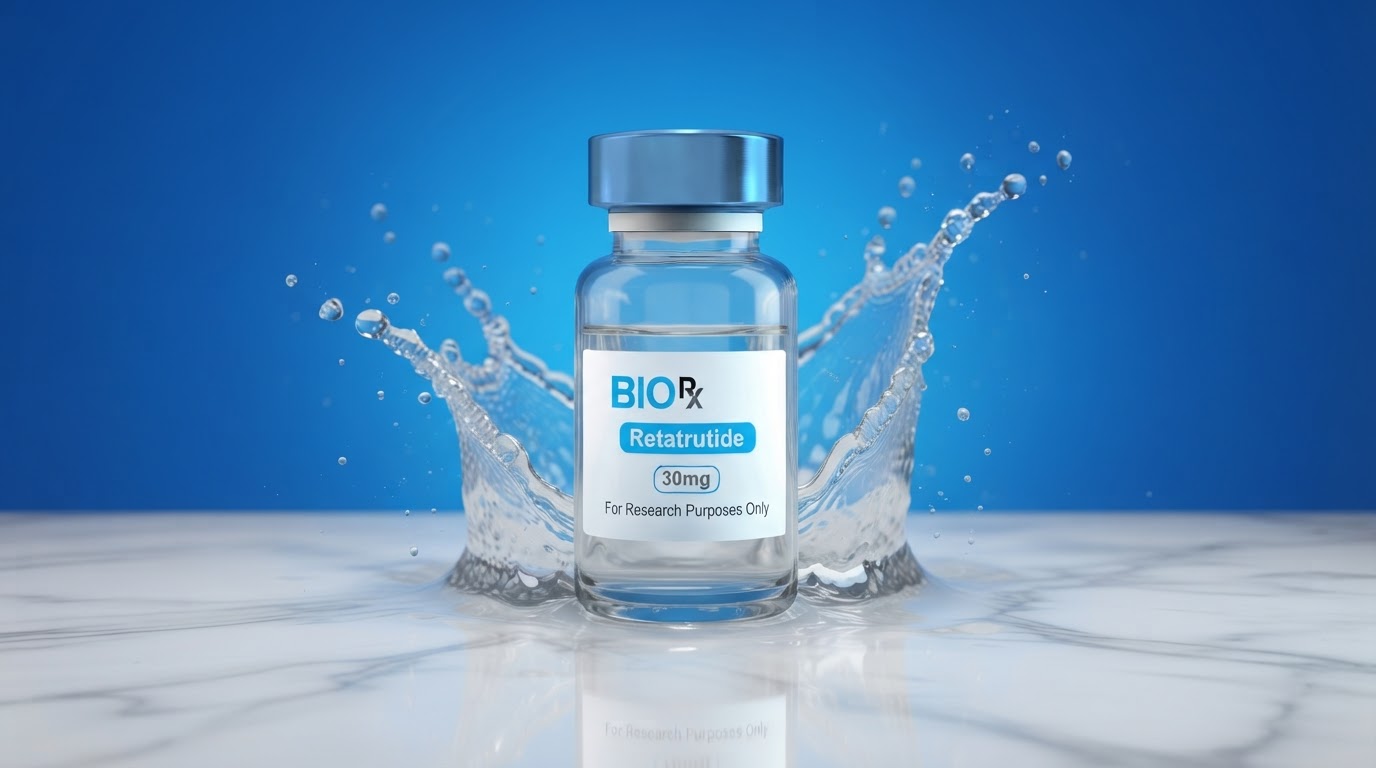
It’s also worth noting that “research use only” labeling, which shows up frequently in discussions of compounds like retatrutide, has a specific and narrow meaning: it indicates that a substance is intended for laboratory research — such as in vitro studies or animal research conducted by qualified professionals in controlled settings — and explicitly not for human consumption. This label is not a loophole or an alternative pathway to accessing a drug; it reflects the genuine, current legal and regulatory status of a compound that has not yet completed the process required for human use approval.
Common Questions About Retatrutide
Is retatrutide the same as tirzepatide or semaglutide?
No. While all three belong to the broader family of incretin-based therapies and share some mechanistic overlap, they are distinct molecules. Semaglutide acts on a single receptor (GLP-1), tirzepatide acts on two (GLP-1 and GIP), and retatrutide acts on three (GLP-1, GIP, and glucagon). Each has its own dosing structure, trial history, and regulatory status.
Has retatrutide been approved anywhere in the world?
As of mid-2026, no. It has not received approval from the FDA, the European Medicines Agency, the UK’s MHRA, Australia’s TGA, Health Canada, or any other major regulatory body. It remains an investigational compound undergoing Phase 3 clinical trials.
Why does retatrutide seem to produce more weight loss than other drugs in its class?
The leading hypothesis is that the addition of glucagon receptor agonism to the established GLP-1/GIP combination adds an energy-expenditure and fat-metabolism pathway that isn’t present in dual- or single-agonist drugs, on top of the appetite-suppressing and blood-sugar-regulating effects those pathways already provide. However, formal head-to-head trials directly comparing retatrutide to tirzepatide or semaglutide in the same study population are limited, so most of these comparisons are drawn from separate trials with different designs, which is a real limitation when interpreting the data.
Does weight come back after stopping treatment?
This question hasn’t been definitively answered for retatrutide specifically, but research on other incretin-based weight-loss drugs, including semaglutide and tirzepatide, has generally shown that a substantial portion of lost weight returns after discontinuation unless it’s paired with sustained lifestyle changes. It’s reasonable to expect that retatrutide could follow a similar pattern, though dedicated withdrawal studies will be needed to confirm this.
What happens after Phase 3 trials finish?
Once a Phase 3 program generates sufficient data, the manufacturer compiles it into a New Drug Application (or equivalent regulatory submission, depending on the country) and submits it to the relevant regulatory authority. That authority then conducts its own independent review, which can include requests for additional data, advisory committee meetings, and facility inspections, before issuing a decision to approve, reject, or request modifications to the application.
The Broader Context: Why This Class of Drugs Matters
It’s worth stepping back and considering why incretin-based therapies, as a category, have generated so much scientific and public interest over the past several years. Obesity and type 2 diabetes are both enormously prevalent conditions with significant downstream health consequences, including cardiovascular disease, certain cancers, joint disease, sleep disorders, and reduced life expectancy. For decades, treatment options for obesity in particular were limited to lifestyle intervention (which, while valuable, often produces modest and difficult-to-sustain results for many people), older pharmacological options with limited efficacy or difficult side effect profiles, and bariatric surgery, which is effective but invasive, not appropriate for everyone, and carries its own risks.
The emergence of drugs capable of producing weight loss in the range of 15-30% through a receptor-targeted mechanism, without surgery, represents a genuine shift in how obesity can be approached medically. This is part of why retatrutide, specifically, has drawn so much scientific attention: if its trial results hold up through the remainder of the Phase 3 program and into real-world use, it would represent a further step in that same trajectory, potentially offering meaningfully greater efficacy than currently available options for people who haven’t achieved their health goals with existing treatments.
That said, it’s equally important not to lose sight of the fact that pharmacological weight loss, whatever the mechanism, works best as part of a broader approach to health that includes nutrition, physical activity, sleep, and other lifestyle factors — something that’s true of every drug in this class, current and investigational alike.
What Comes Next
Retatrutide’s story is still being written. Several additional Phase 3 trials are expected to report results before the end of 2026, including studies focused on cardiovascular outcomes and additional diabetes populations. Assuming the data continues to support the drug’s efficacy and an acceptable safety profile, the next major milestone will be the submission of a New Drug Application to the FDA, followed by a formal review process that typically takes 10-12 months. If that process concludes favorably, retatrutide could receive its first regulatory approval sometime in late 2027, with commercial availability potentially following in 2028 — though these projections are estimates built on standard timelines rather than guarantees.
In the meantime, the compound continues to be an active and closely watched subject of biomedical research, with each new trial readout adding to a growing and increasingly detailed picture of what triple-hormone-receptor agonism can and can’t do for metabolic disease.
Conclusion
Retatrutide represents a genuinely novel approach to treating obesity and type 2 diabetes, built on a growing body of research into how the body’s own hormonal systems regulate appetite, blood sugar, and energy expenditure. The clinical trial results reported so far are striking, and they’ve reasonably earned retatrutide a reputation as one of the most significant compounds currently moving through the pharmaceutical pipeline. At the same time, the side effect profile is real, long-term data is still being collected, and the drug remains firmly in investigational territory — a research compound advancing through the formal, evidence-based process that exists precisely to determine whether a promising molecule in the lab translates into something safe and effective enough for widespread human use.
As the TRIUMPH and TRANSCEND trial programs continue to report results throughout the rest of 2026, the coming months should bring a clearer, more complete picture of where retatrutide ultimately fits into the future of metabolic medicine.
This article is for informational purposes only and does not constitute medical advice. Retatrutide is an investigational compound not currently approved for human use by any regulatory authority. Anyone with questions about weight management, diabetes, or other metabolic health conditions should consult a licensed healthcare provider about currently approved treatment options.